Garden Clearance in Peckham

Garden clearance in Peckham should leave outdoor spaces tidy, workable and ready for whatever comes next, whether that means regular upkeep, a seasonal reset or the removal of accumulated cuttings, bags and broken garden items. Our service is focused on practical clearance work: lifting green waste, separating reusable items where appropriate, and dealing with the mixed material that often builds up after pruning, reshaping or long periods without attention. We handle the physical work carefully so the space can be brought back into order without needless disruption.
Because every garden is different, we plan around the type of materials present, the access available and the finish the customer wants. Some clearances are mainly light and green, while others include soil, timber, plant pots, old planters, fencing offcuts or dismantled features that no longer serve a purpose. Our aim is to remove what needs to go and leave the remaining space easier to use, maintain and improve. If you need a quotation, you can get in touch for a no-obligation estimate and outline the work required.
We work with homeowners, landlords, tenants and property managers who need a straightforward clearance service rather than a full landscaping package. That may involve clearing overgrown borders, removing waste after hedge work, or tidying a neglected garden before routine maintenance begins again. Where possible, we keep the process simple: identify the main materials, agree the access, and set out what needs collecting so the job can be planned sensibly. If you are ready to move things on, send the details when convenient.
What our garden clearance service covers
Garden clearance often starts with visible waste, but the scope is wider than a single pile of clippings. We remove green waste such as leaves, branches, hedge trimmings and cut plants, along with non-organic items that have ended up in the same space. Broken pots, old compost bags, damaged garden furniture components and dismantled small structures can all be part of the job when they are ready to come out. The work is organised to keep the area safe and reduce the chance of bits being missed among larger piles.
For many properties, the most useful result is not only that the waste disappears, but that the garden becomes easier to inspect and plan. Once the surplus material is out of the way, paths, beds, sheds, side returns and borders are easier to assess. That can help with follow-on tasks such as pruning, replanting, laying new gravel or preparing a patch for new use. If you need a fuller picture of what is included, our garden clearance page explains the service in more detail.
Supported clearance work can also include collecting awkwardly placed material from corners, alongside fences or at the end of narrow side access routes. In built-up parts of Peckham, that practicality matters as much as the finish itself. We work methodically so that the area is cleared in a sensible order rather than being disturbed more than necessary. If the garden contains a mix of lightweight and heavier items, the handling approach is adjusted so the work remains controlled from start to finish.
Green waste, hard waste and mixed outdoor items
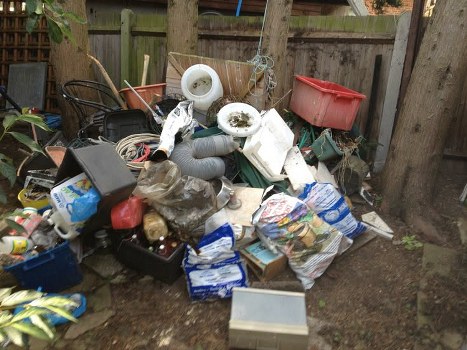
Not every clearance is limited to organic waste. Gardens often contain a blend of soft green material and harder items that need lifting at the same time. A border may include prunings and weeds alongside broken edging, while a shed area may hold old hosepipes, disused plant supports, planters and packaging left from previous projects. We can remove mixed outdoor waste as a single organised clearance where it is appropriate to do so, rather than asking the customer to separate everything in advance.
That said, some materials need slightly different handling, and it helps to keep them identified from the start. Green waste is usually bulked differently from wood, metal or general garden debris, and heavier items may affect loading and access planning. The value of a clear quotation is that it reflects the actual mix, not a generic estimate based on the garden size alone. For this reason, the more specific the description of the waste, the more accurately the work can be planned. You can ask for a quote when you are ready.
Where the clearance is part of a broader tidy-up, we can work through the garden in sections so nothing important is overlooked. That is helpful if there are planted areas to keep, features to retain, or items that need separating for reuse. A careful method also suits properties where the available space is limited, since materials can be moved out in a way that avoids blocking access routes. The result is a more orderly clear-out and a cleaner final space.
Garden items, fixtures and awkward clearance jobs
Some jobs involve more than loose waste. Gardens can accumulate damaged benches, broken plant containers, unwanted ornaments, worn timber edging and small outdoor fixtures that no longer fit the space. These items often need to be lifted in a planned order because of their shape or position. Our clearance approach is suited to that sort of work, where the task is to remove the item cleanly without disturbing the rest of the garden more than necessary.
In addition to loose and bulky garden items, we can deal with material that has become awkward because it has been left for some time. Tangled branches, collapsed supports, overloaded sacks and mixed piles near sheds or fences all take extra care to sort. The practical question is usually not whether an item is large, but whether it can be removed safely and with a clear route out of the property. Furniture clearance may be useful where outdoor seating or storage pieces are involved and need to be taken away alongside the garden waste.
If the clearance includes an old structure or a built feature that has reached the end of its life, the work may overlap with broader removal tasks. We keep the scope clear from the outset so that customers know what is being cleared and what is being left in place. That helps prevent confusion around partial dismantling, access limits and the best way to break down items before loading. The end result should feel orderly rather than improvised.
How we approach access, loading and preparation
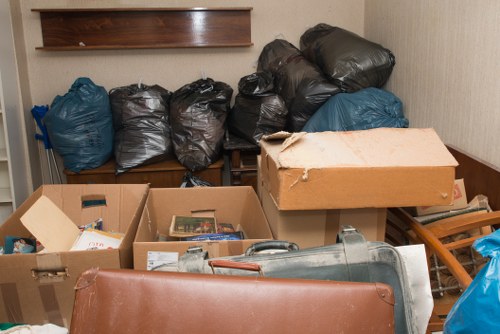
Garden clearance is often easiest when the route from the garden to the vehicle is understood in advance. Narrow side passages, shared paths, steps, rear access and internal routes through a property can all influence how the work is organised. We therefore look at the practical side of access before the clearance begins. That does not need to be complicated: it simply means knowing where materials can be moved, where they should not be dragged, and whether anything needs to be protected on the way out.
For a useful quotation, it helps to know what type of waste is present and whether it is already stacked, bagged or still spread across the garden. A brief description is often enough, although photos can also help if the clearance involves several different materials or difficult access. If there are items that must stay in place, it is useful to identify them clearly so the work can be planned around them. Clear information at the start usually makes the job smoother for everyone involved.
We also pay attention to the final loading stage, since many garden clearances involve a mixture of lightweight and heavier pieces. A sensible sequence helps prevent repeated carrying and reduces unnecessary handling. Where sorting is needed, it is done in a way that supports the intended disposal route and keeps the garden usable once the work is complete. This practical approach is often what makes a straightforward clearance feel well managed rather than hurried.
Pricing factors and quotation details
Garden clearance pricing usually depends on a few clear factors: the type of material, the amount to be removed, access conditions and any extra handling required for awkward or mixed waste. A pile of light cuttings is not the same as a garden containing branches, soil, timber and disused outdoor items, so a quotation should reflect the actual work rather than a rough guess. That is why descriptions of the material and the space involved matter more than simple assumptions about garden size.
In some cases, the most relevant question is how long the job will take to load rather than how the garden looks at first glance. Items that are easy to reach can move quickly, while materials tucked behind sheds, stacked in corners or mixed with usable tools may take longer to sort. If you want a clearer view of the factors that shape the cost, see our pricing and quotes information before requesting your estimate.
To keep the quotation process practical, it usually helps to mention whether the work is a one-off clear-out, part of a move, or preparation for further garden work. That context allows the scope to be interpreted correctly. We can then focus on the right level of collection, rather than adding assumptions that do not match the property. The aim is a fair and readable quote that matches the task in front of you.
Choosing the right clearance approach for your property
Different gardens call for different levels of intervention. A lightly used courtyard may only need a quick removal of cuttings and a few unwanted items, while a larger back garden may require more organised sorting and loading across several areas. Our service is flexible enough to handle both approaches, provided the scope is made clear. That means the work can be scaled to the state of the garden without turning into an overcomplicated project.
It can also help to consider whether the clearance is mainly about tidying, or whether it is the first step in a bigger change. Some customers want a simple return to order after routine gardening, while others are clearing a plot for replanting, repairs or further maintenance. If the work extends into house-related removal tasks as well, our home clearance page may be relevant where indoor and outdoor items need to be dealt with together. In either case, a well-defined scope keeps the job efficient.
We keep the emphasis on the clearance itself: removing unwanted material, leaving the rest of the garden intact and making sure the space is ready for whatever comes next. That practical focus is often the most useful thing for customers who do not want to spend time organising separate removals for every different type of item. It gives a cleaner result and a clearer plan from the start.
About Peckham
Peckham is a district in the London Borough of Southwark, in south-east London, with a character shaped by layers of suburban growth, post-war redevelopment and more recent cultural change. Historically it developed from a village and farmland into a densely built urban area connected to central London by rail and road, and it still shows that transition in its streetscape. Alongside terraces and later housing, there are commercial strips, community buildings and a varied mix of independent businesses that reflect the area’s long period of adaptation. Rye Lane remains one of the best-known routes, with a busy commercial life that has helped define the district for generations.
The landscape around Peckham includes a number of familiar open spaces and local landmarks. Peckham Rye Park and Common provide a large area of green space, with paths, trees and recreational facilities that give the district a more spacious character than its dense housing might suggest. The area also includes parts of the Peckham Rye station area, which connects the district to wider south London and beyond. Architectural variety is one of Peckham’s notable features: Victorian and Edwardian streets sit alongside modern redevelopment, while older civic and religious buildings contribute to the visual mix. Cultural life has become an important part of the district’s identity too, with galleries, studios, performance spaces and food businesses adding energy to its everyday rhythm. That blend of movement, retail, housing and open space gives Peckham a distinctly urban but layered feel.
For visitors and residents alike, the appeal of Peckham lies partly in that variety. There are busy main roads and quieter side streets, areas of heavy pedestrian activity and calmer residential pockets, and a local environment where everyday commerce sits close to parks and community amenities. The result is a place that feels lived-in and changeable rather than fixed, with each street often showing a different stage in the area’s evolution. Its identity has been influenced by transport, migration, local enterprise and a strong sense of neighbourhood life, all of which continue to shape how the district is experienced today.
Why a tidy outdoor space matters

A cleared garden is easier to inspect, simpler to maintain and more straightforward to improve. When waste builds up, it can hide damage, restrict movement and make ordinary tasks feel more involved than they should. Removing the unwanted material creates a clearer starting point for mowing, pruning, replanting or basic repairs. It also makes it easier to see which items still have value and which ones are simply taking up useful room in the garden. That is one reason customers often request clearance before any other outdoor work.
The right approach depends on what the space is meant to do next. A family garden may need a tidy, safe layout with room to use it again, while a rental property may need a practical reset between tenancies or after a period of neglect. Our service is designed to support that kind of reset without overcomplicating the job. If the garden also includes old household items, broken furniture or stored clutter, a related flat clearance service may be worth considering where indoor and outdoor removals overlap.
Whatever the setting, the key benefit is clarity: once unwanted material is removed, decisions about the space are easier to make. That might mean replanting, replacing worn fixtures or simply keeping the area more manageable from week to week. A garden does not need a major redesign to benefit from clearance; sometimes the most valuable change is simply getting back control of the space.
Other removal services that may help
Although garden clearance is the main focus here, some properties need related removal work that touches other parts of the site. For example, garages, lofts and homes often contain items that have drifted outdoors over time or that need to be removed before the garden can be fully cleared. In those cases, it can be useful to think about the whole property rather than the outside space alone. That way the clearance can be organised in a logical order instead of handled piecemeal.
Where the job includes general household contents, one of our broader removal pages may be relevant depending on what is being taken away. Our house clearance page covers domestic clearance work, while the garage clearance page is useful for properties where stored outdoor equipment, boxes or old tools are part of the task. If the waste is mostly non-organic and mixed with heavier items, the broader waste removal page can also help explain the scope.
Linking the right services together can make the overall job more efficient, especially where the garden is only one part of a wider clear-out. The important point is to choose the service that matches the material and the property layout, rather than forcing everything into one category. That keeps the quotation accurate and the collection process sensible from the outset.
Requesting a quotation for garden clearance

When you are ready to arrange garden clearance in Peckham, the easiest next step is to request a quotation with a short description of what needs to go. Mention the main types of waste, whether access is straightforward, and whether the clearance is limited to the garden or includes nearby storage areas as well. Those few details are usually enough to start a sensible estimate and avoid back-and-forth that does not add value.
It also helps to say whether the garden is currently cluttered with loose material, stacked bags or larger items that need lifting first. If there are items you want to keep, or features that should be protected during the clearance, make that clear at the same time. Clear instructions lead to a more accurate scope, and that in turn helps make the job smoother on the day. If you would like to move ahead, ask for your quotation today.
For customers who want a simple, organised garden clearance service, our team is ready to handle the practical removal work and leave the space in better order. Whether the job is small and tidy or involves a fuller mix of green waste and unwanted outdoor items, we can help you get the garden back under control. Begin with a quick enquiry and we will take it from there.